Research
Research Overview
Galioglu group focuses on nanoporous zeolites, metal-organic frameworks (MOFs), and ultrafast lasers/material interactions from both fundamental science and applications points of view, such as nucleation and growth dynamics of zeolites, patterned thin film formation, and photocatalytic activities.
SYNTHESIS OF NANOPOROUS ZEOLITES
Zeolites are preferred adsorbents, ion-exchangers, and catalysts for many reactions of industrial importance. They have high thermal stability (650 – 1000 °C), acidity with both Bronsted and Lewis acid sites, shape selectivity with molecular-sized pores (< 2 nm), ion-exchange properties, and high specific surface area. They are used in various industrial applications such as heterogeneous catalysis, oil refinement in the petrochemical industry, gas sensors, adsorption, ion-exchanger for detergents, and ion-exchanger for nuclear waste in the oceans. The global catalyst market is expected to reach 57.5 billion USD by 2030 according to the Emergent Research catalyst market industry report (www.emergenresearch.com). Zeolites are a crucial part of the heterogeneous catalysis industry, primarily due to their molecular-sized micropores (< 2 nm).
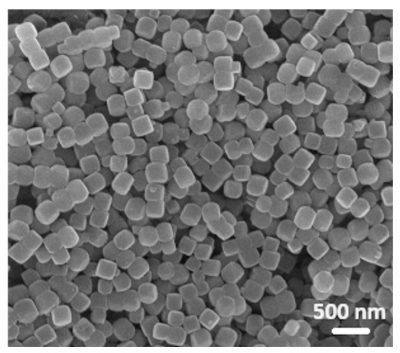
SEM image of Zeolite A crystals
A fundamental challenge in zeolite synthesis is to elucidate and control the nucleation and growth of the zeolite crystals. Our group introduced new zeolite synthesis method based on ultrafast lasers to design the zeolite crystals with tailored physicochemical properties for different application areas such as photocatalysis.
Related Projects
- The Scientific and Technological Research Council of Türkiye (TUBITAK) 3501, (PI: Dr. Sezin Galioglu, Ongoing)
- The Scientific and Technological Research Council of Türkiye (TUBITAK) 1001, (PI: Dr. Serim İlday)
- European Research Council (ERC) Starting Grant, (PI: Dr. Serim İlday)
PATTERNED METAL ORGANIC FRAMEWORK (MOF) THIN FILMS
Porous metal organic frameworks (MOFs) have become one of the growing research fields because of their structural and functional tunability and extremely high surface areas (2750 – 7140 m2/g) with exceptional gas (hydrogen, methane, and carbon dioxide) uptake capacities. Although MOFs have superior properties to zeolites, such as very high surface areas, they are not as commercialized as zeolites. Arguably, the main reasons for this are the expensive multi-step production methods and stability problems.
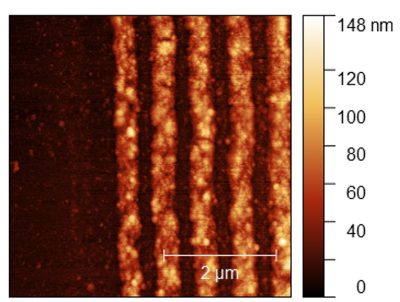
AFM image of nano-sized patterns
The ability to produce these films in a patterned configuration is an important issue and essential for applications. In the literature, at least six-stage production methods require high vacuum, mask production/usage, clean room conditions, functionalized substrates, and usage of solvents, reducing reproducibility of production methods. Our group introduced a sustainable and repeatable patterned thin film production method to accelerate the commercialization of MOF thin films based on a nonlinear laser lithography technique (Invented by Ilday O. et al., Nature Photonics, 2013, 7, 897).
Related Projects
- The Scientific and Technological Research Council of Türkiye (TUBITAK) 1001, (PI: Dr. Sezin Galioglu)
PHOTOCATALYTIC ACTIVITY OF NANOPOROUS MATERIALS – ZEOLITES AND METAL ORGANIC FRAMEWORKS (MOFs)
Photocatalytic Dye Degradation
Industrial MB dye poses a serious threat to human and environmental safety as it is a toxic and carcinogenic substance that contaminating drinking water. Photocatalytic dye degradation, an advanced oxidation method, is considered a sustainable and environmentally friendly alternative compared to adsorption and biological treatment processes. Our group introduced a method to synthesize titanium-substituted nanoporous zeolites to enhance photocatalytic dye degradation efficiency.
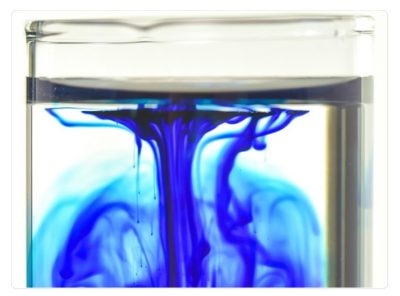
Methylene blue fall in water in glass tube. Image Credit: FreeProd33 / Shutterstock
Green Hydrogen
Global energy consumption is increasing, and traditional carbon fuels threaten the environment and humanity. It is predicted that photocatalytically produced hydrogen, also called “green hydrogen”, will be one of the most important energy sources of the future. Developing highly efficient photocatalysts for hydrogen production is of great importance for the use of solar energy in hydrogen production. Our group aims to develop a composite photocatalyst that shows synergistic effects of nanoporous materials and semiconductors.
Related Projects
- The Scientific and Technological Research Council of Türkiye (TUBITAK) 3501, (PI: Dr. Sezin Galioglu, Ongoing)
- The Scientific and Technological Research Council of Türkiye (TUBITAK) 2218, (PI: Dr. Melda İşler Binay, Advisor: Sezin Galioglu, Ongoing)
National Nanotechnology Research Center
(UNAM, Ulusal Nanoteknoloji Araştırma Merkezi)
Institute of Materials Science and Nanotechnology
Bilkent University, Ankara, 06800, Türkiye
Phone: +90 312 290 3538
e-mail: sezin(at)unam.bilkent.edu.tr