Dr. Sezin Galioglu holds the position of Principal Investigator/Scientist at the National Nanotechnology Research Center and continues her work with her team in the Galioglu group. She is a nanotechnologist with a research focus on microporous zeolites, metal organic framework thin films, and ultrafast lasers/material interactions both from the fundamental science and applications points of view. She received her Ph.D. degree from Micro and Nanotechnology Department, Middle East Technical University, Ankara, Türkiye (Thesis title: Optical and Electrical Characterization of Titanosilicate ETS-10 Thin Films: Photochromism and Ionic Conductivity). In her M.Sc. and Ph.D. studies, she worked on zeolites, inorganic microporous aluminosilicate materials that can be considered as an assembly of two subsystems namely, the covalently bonded and negatively charged aluminosilicate framework and, ionically bonded exchangeable cations. They are used in various application areas such as heterogeneous catalysis, oil refinement in the petrochemical industry, gas sensors, adsorption, ion-exchanger for detergents etc. During her graduate studies, she worked as a visiting researcher in various laboratories such as Center for Microcrystal Assembly, Sogang University, Seoul, South Korea, Center for Advanced Microgravity Materials Processing (CAMMP), Northeastern University, Boston, U.S.A, Texas Tech University, Edward E. Whitacre Jr. College of Engineering, Lubbock Texas, U.S.A, CNRS à l’Institut des Sciences Analytiques de l’Université Claude Bernard-Lyon 1, Lyon, France and Hubert Curien Laboratory, Universite Jean Monnet, Saint Etienne, France.
In her postdoctoral study in the Simply Complex Lab at Bilkent University UNAM under the supervision of Prof. Serim İlday, she conducted experimental work on dissipative colloidal self-assembly using ultrafast lasers. The universality of dissipative self-assembly is shown from quantum dots to human cells (Nature Physics, 16, 2020, 795).
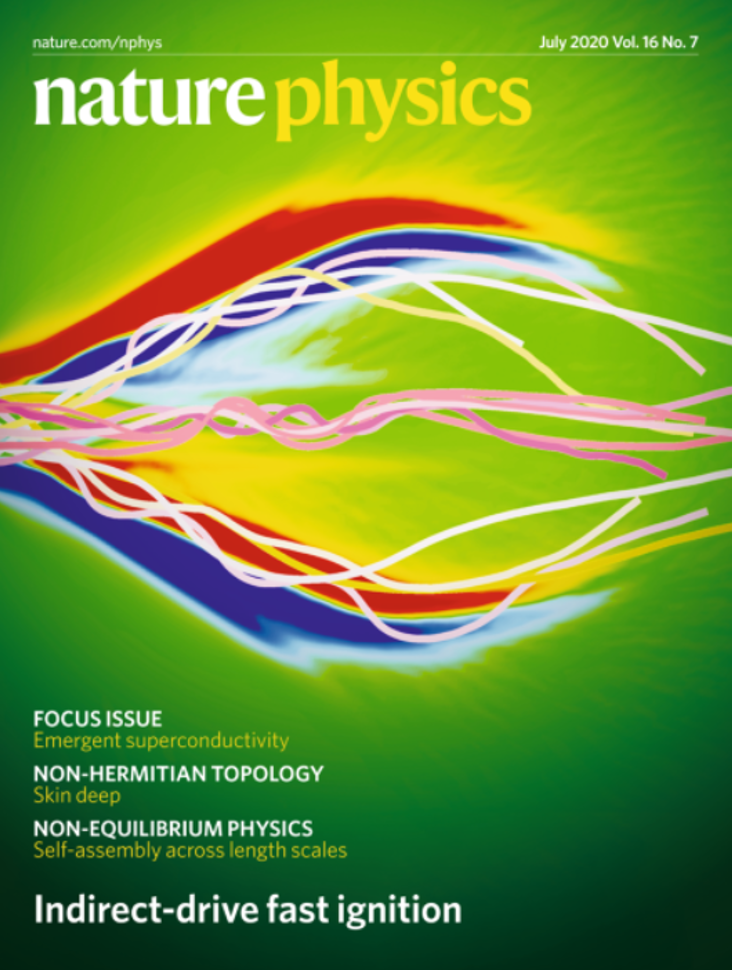
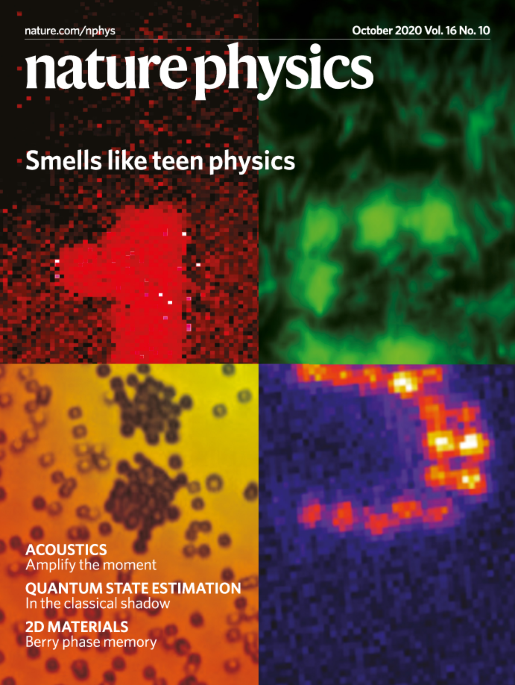
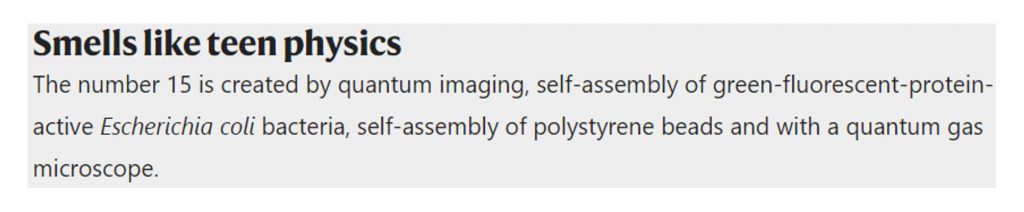
This paper is highlighted in the feature article “15 years of Nature Physics” and on the cover of the journal’s October issue “Sweet Fifteen.” It is also listed in Wikipedia’s “2020 in science” selection (on 20 April) and featured in a news & views piece by Dr. Gili Bisker “Dissipate your way to self-assembly”.
 After performing experiments using ultrafast lasers on dissipative colloidal self-assembly with various active and passive materials, Dr. Galioglu implemented the idea of ultrafast laser-driven self-assembly to inorganic microporous zeolite synthesis and proposed a novel synthesis technique for zeolites in the scope of TUBITAK project under the 1001 (basic science) scheme.
Later, she proposed a novel thin film production method to produce patterned metal organic framework (MOF) thin films using ultrafast lasers. It was granted by TUBITAK under the 1001 (basic science) scheme. In the project, inspired by the nonlinear laser lithography (NLL) technique invented by the UFOLAB at Bilkent University (Ilday O. et al., Nature Photonics, 2013, 7, 897), she conceived the idea of fabricating patterned porous metal organic framework thin films